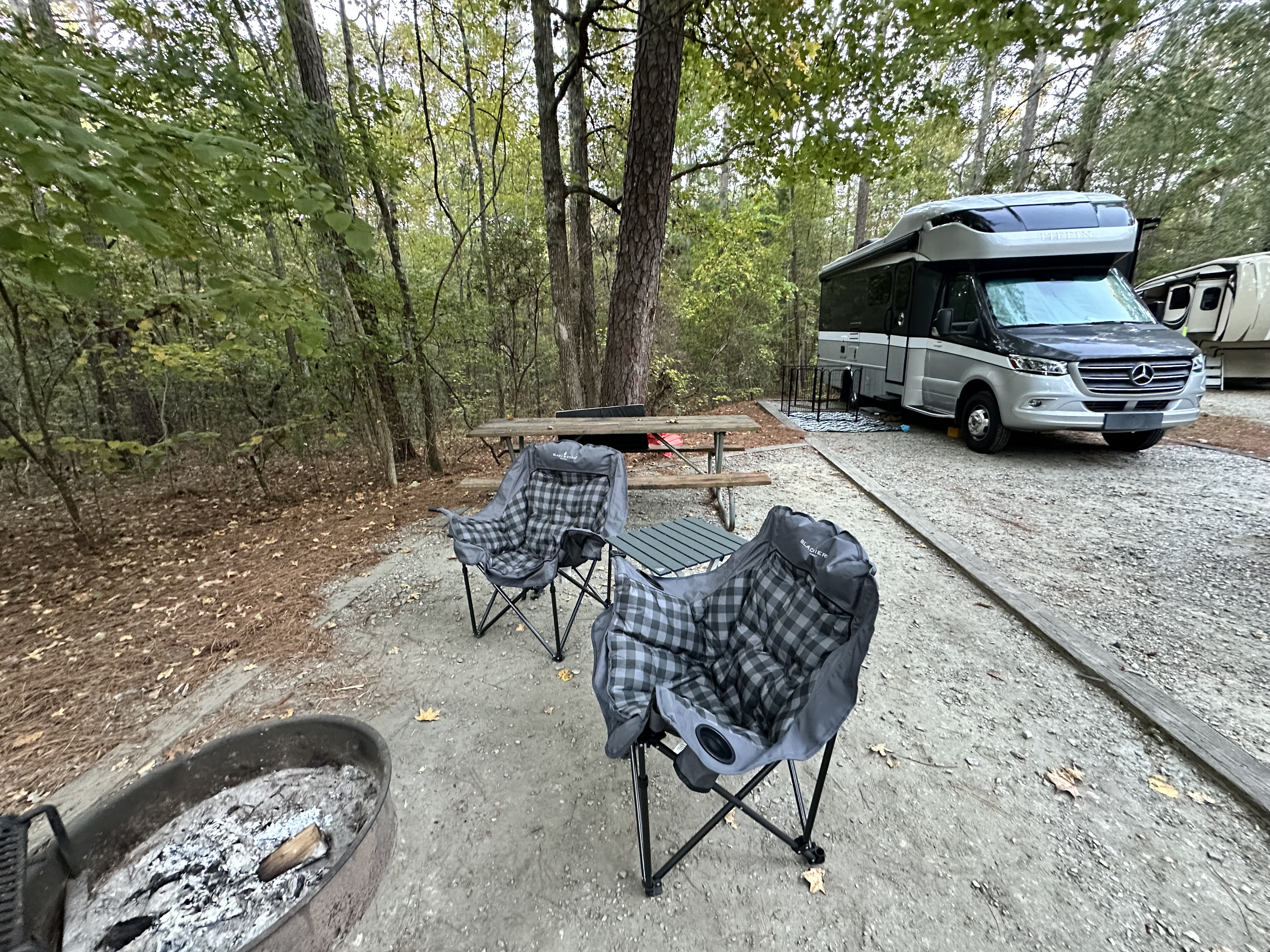
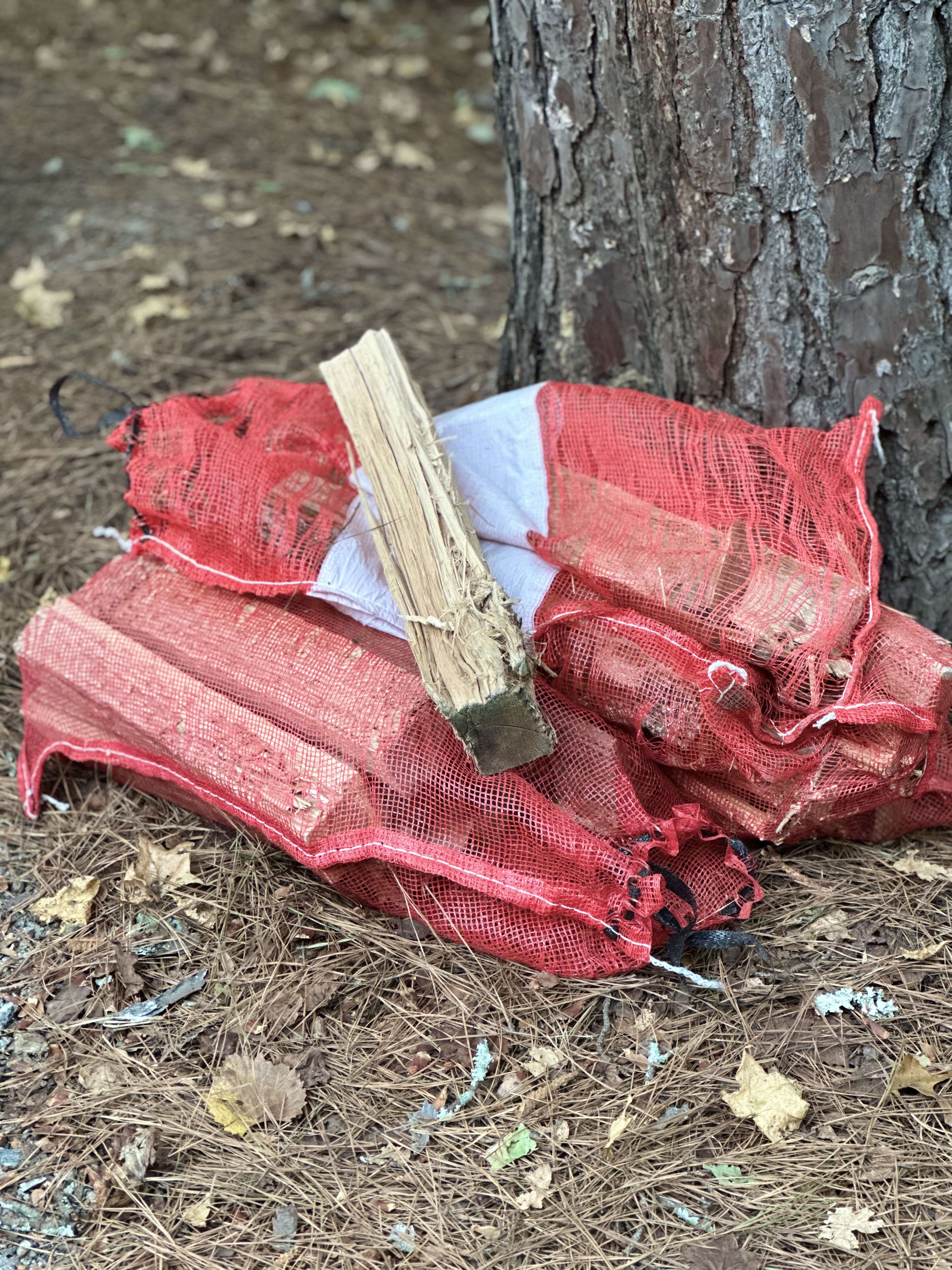
We are home from a weekend of camping, and what a joy to spend it with my husband and dogs at one of our favorite places! We left Friday evening with no trip to the grocery store, just our pajamas and toothbrushes and a change of clothes. We only took food we had on hand in the fridge and pantry.
That’s a big change from the first way we camped. We used to go all out with hanging string lights and decorating and doing all the camping things like making s’mores and having a thousand snacks. Now, we’ve learned that the more we put up, the more we have to take down. The more we prepare, the more we feel we must do. So now, we resist all temptation to put out more than our postside name sign that tells other campers who we are and where we’re from. We keep it simple, from the food to the decor to the clothes.
Over the weekend, I added another thing to my list of 100 Things to Do in Retirement. A necessary thing, but I would definitely not call it a favorite. It will go at the bottom of the list among the least favorite, and is there only because to do a fun thing, I have to do a not-so-fun thing.
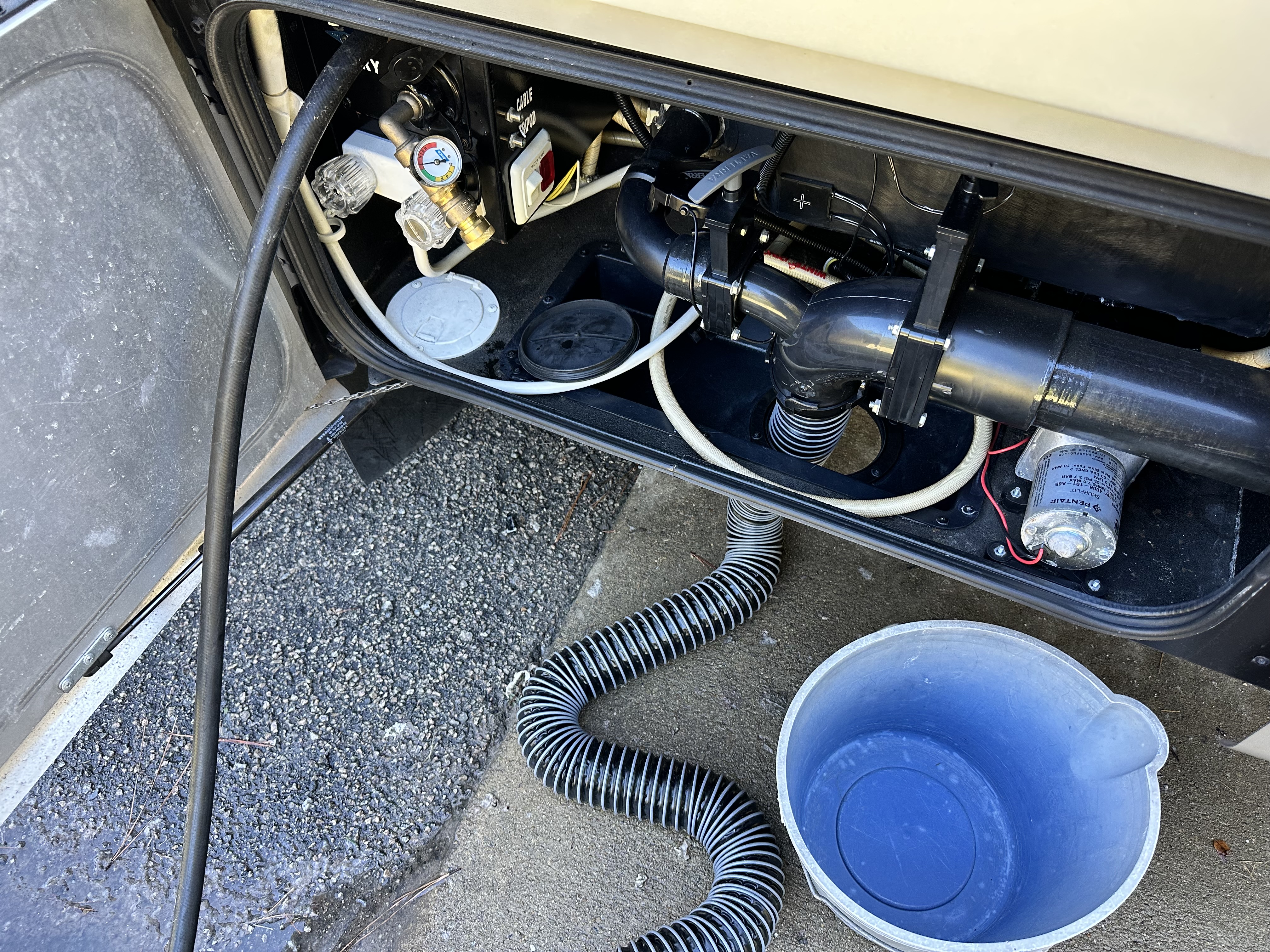
I’ve helped do this task for years, but until this weekend I’ve not completed the whole chore of dumping the Wayfarer on my own. And it was a natural step in the process. I can drive it, back it into the campsite, and hook up the water and the electric. I can put out the slide and level the RV (okay, it’s self-leveling, but I’ll take it). And now, as of today, I can dump the gray and blank tanks all by myself.
I knew that I could venture out alone for boondocking with the generator, but now I feel good about setting up and staying somewhere for a few days if I get the urge to go on a solo camping trip or join the Girl Campers at a meet-up and make some new friends.
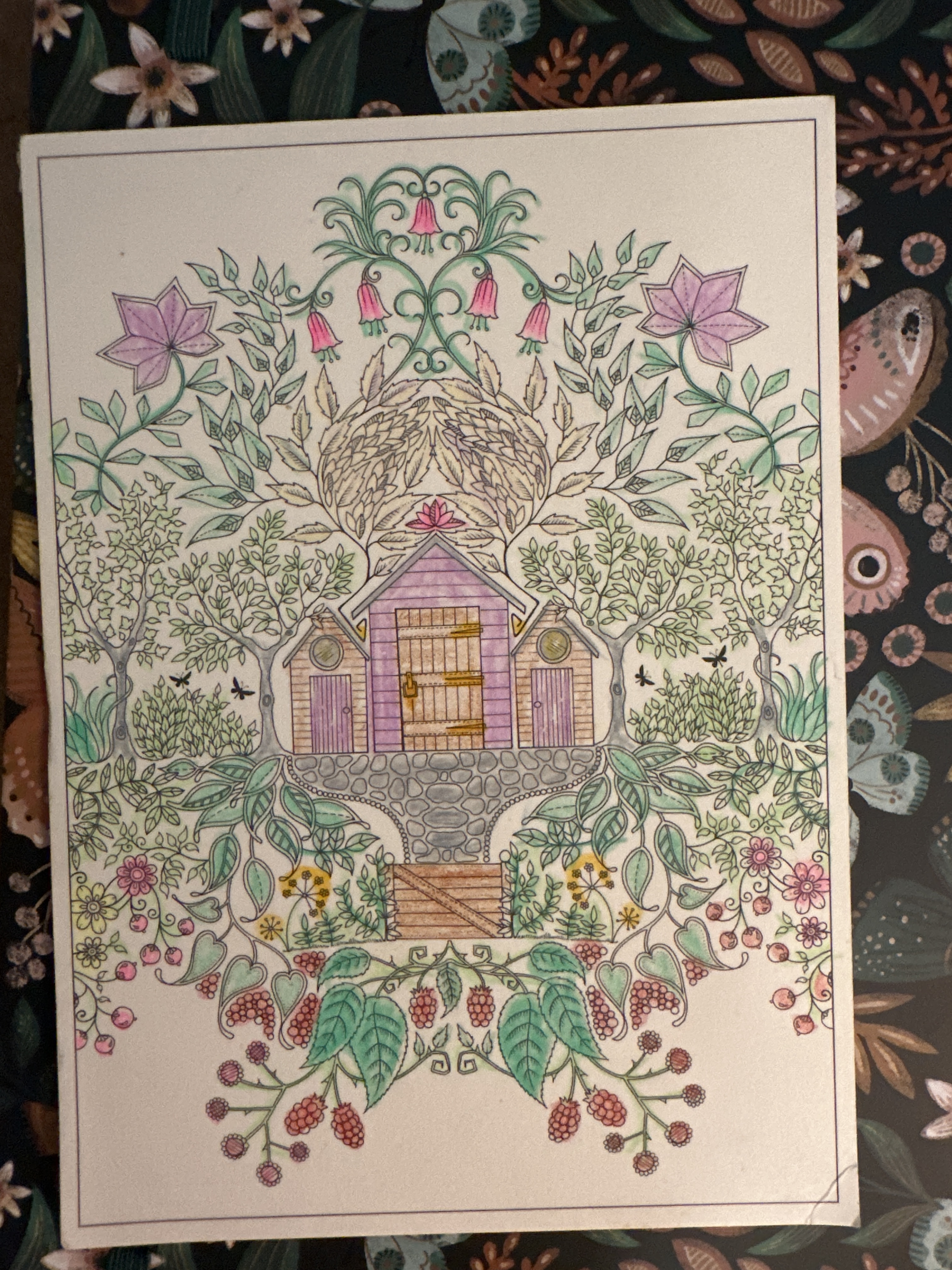
Nothing has to be a stellar work of art to participate in the Cascadia Postcard Poetry Fest, and it’s a good thing, since I’m no talented word or picture artist. But I do enjoy the peace and relaxation of colored pencils, watercolors, and other art supplies – – I think the arts and crafts days of childhood took strong enough root to stay with me for life, blooming like perennials season after season.
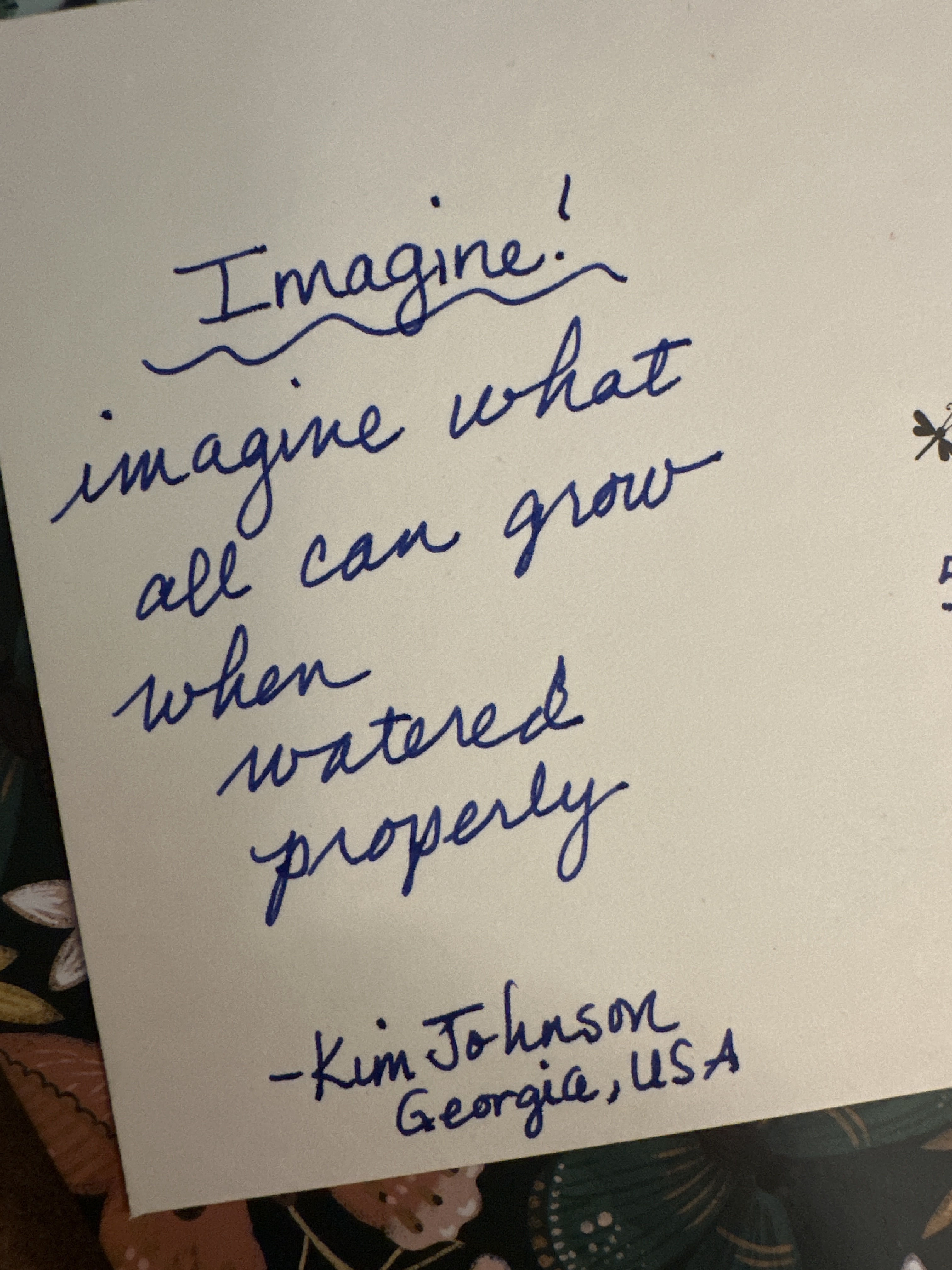
And the love of feeling creative has never been a more welcome time than as I began the monthly poetry postcard challenges that started earlier this year for me. Cascadia Postcard Poetry Fest, a Seattle-based worldwide event, was introduced to me by members of my small group Stafford writing group, so I joined this past summer and received my list of names of those to send cards. Registration for the 2027 PPF is underway, as you can see at the link above. The goal: write a poem a day on a postcard and work your way through the names, mailing one to each person on your list. Then watch your mailbox for the long forgotten joy of mail that isn’t all bills.
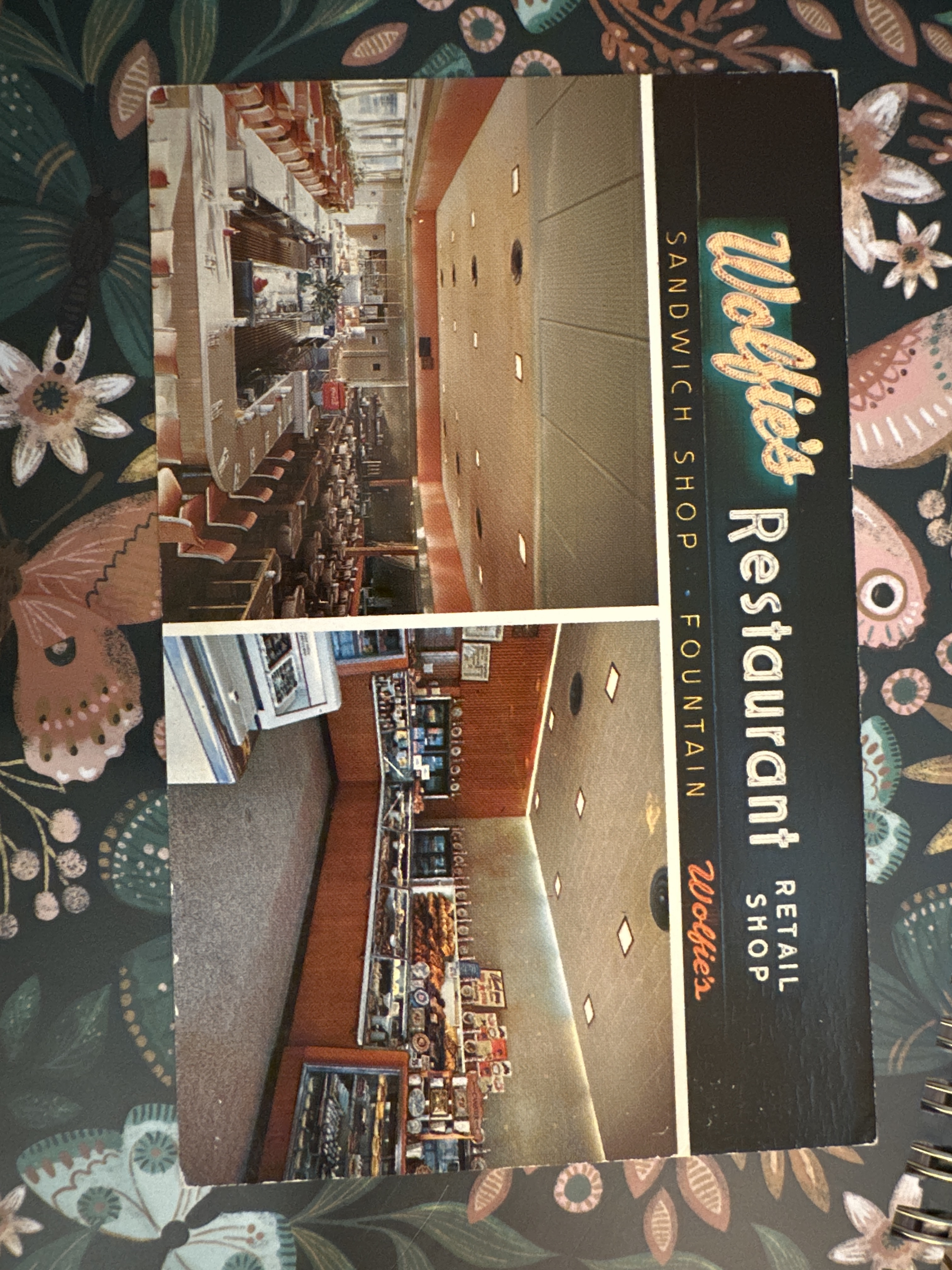
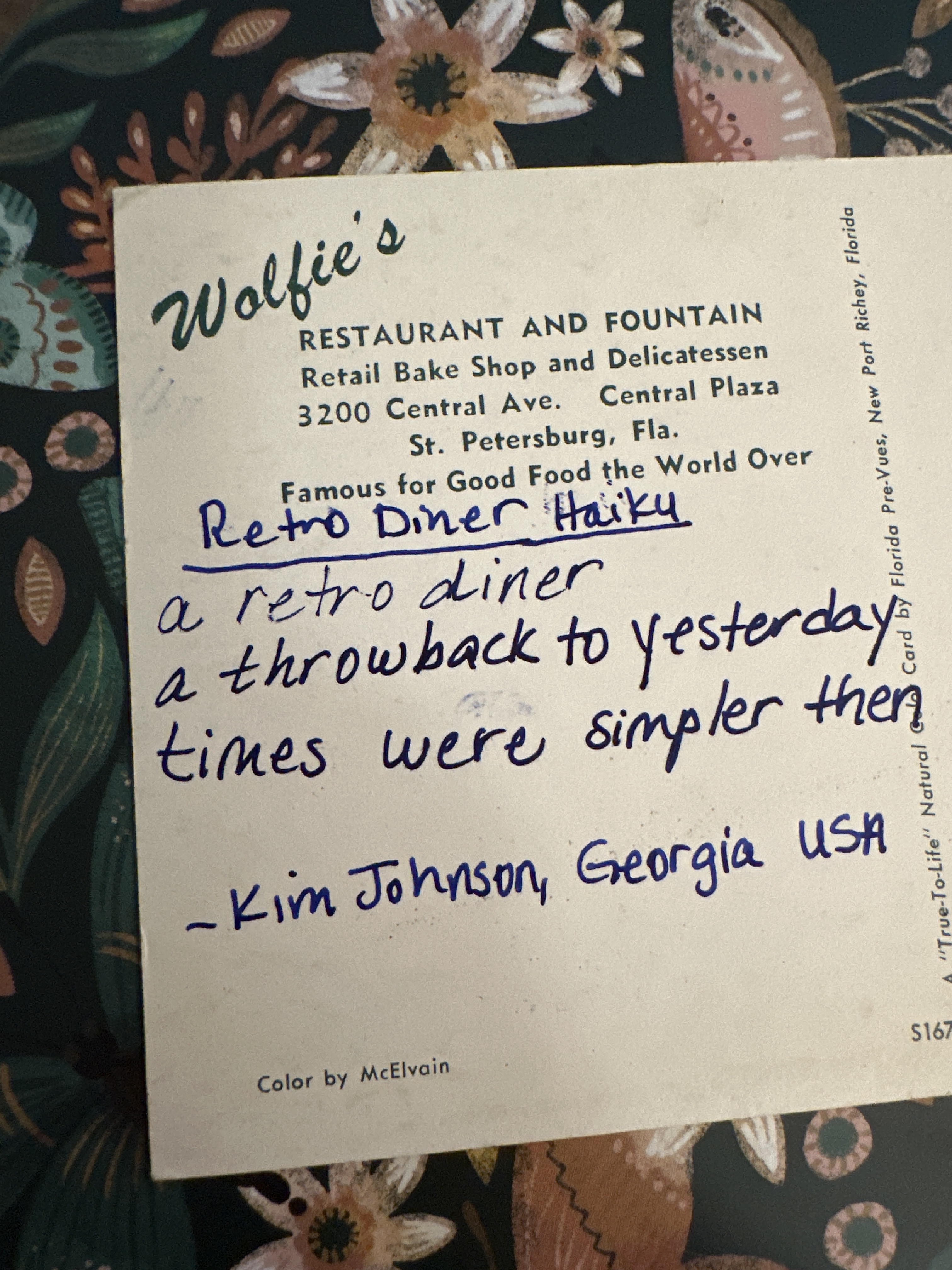
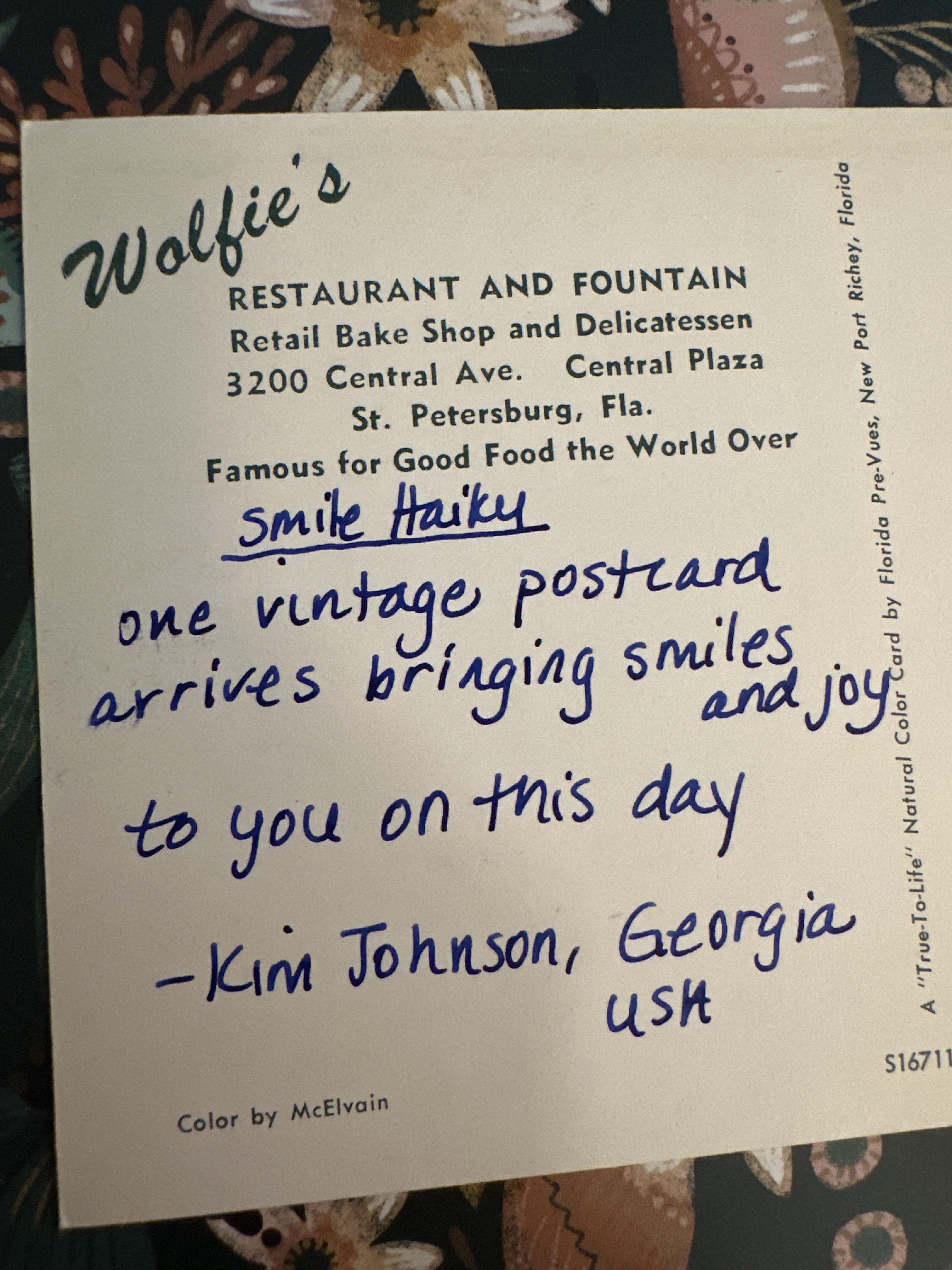
Throughout the rest of 2026, I’ll be sharing some of the postcards that I have mailed, along with some I’ve received. There is nothing like a smile at the mailbox from someone across the miles who takes time to write a poem and mail it your way! It’s a lost art just waiting to make its comeback!
“I’m so glad I live in a world where there are Octobers.” – Anne Shirley,
from L.M. Montgomery’s 1908 classic novel Anne of Green Gables
Fall is, without any close seasonal competition, my favorite time of year. It’s cool but not cold, warm but not hot, and unlike springtime, there are fewer allergens and no pollen blanketing everything outdoors. And there is also no mad rush for holiday preparation, either. Don’t get me wrong – – I do enjoy holidays, but fall brings the peace before the chaos, the calm before the storm of Christmas shopping, baking, and gatherings. The dogs are still content and settled, not yet stirred up in all the changes in routine and visitors.
And the leaves. Nature’s masterpiece has matured from her springtime buds, ripened to her full bloom in the summer, and in fall has crisped to all the gorgeous shades of an artist’s palette. It’s stunning to step outside and look to a valley resplendent with fall colors for miles in every direction from the top of a mountain.
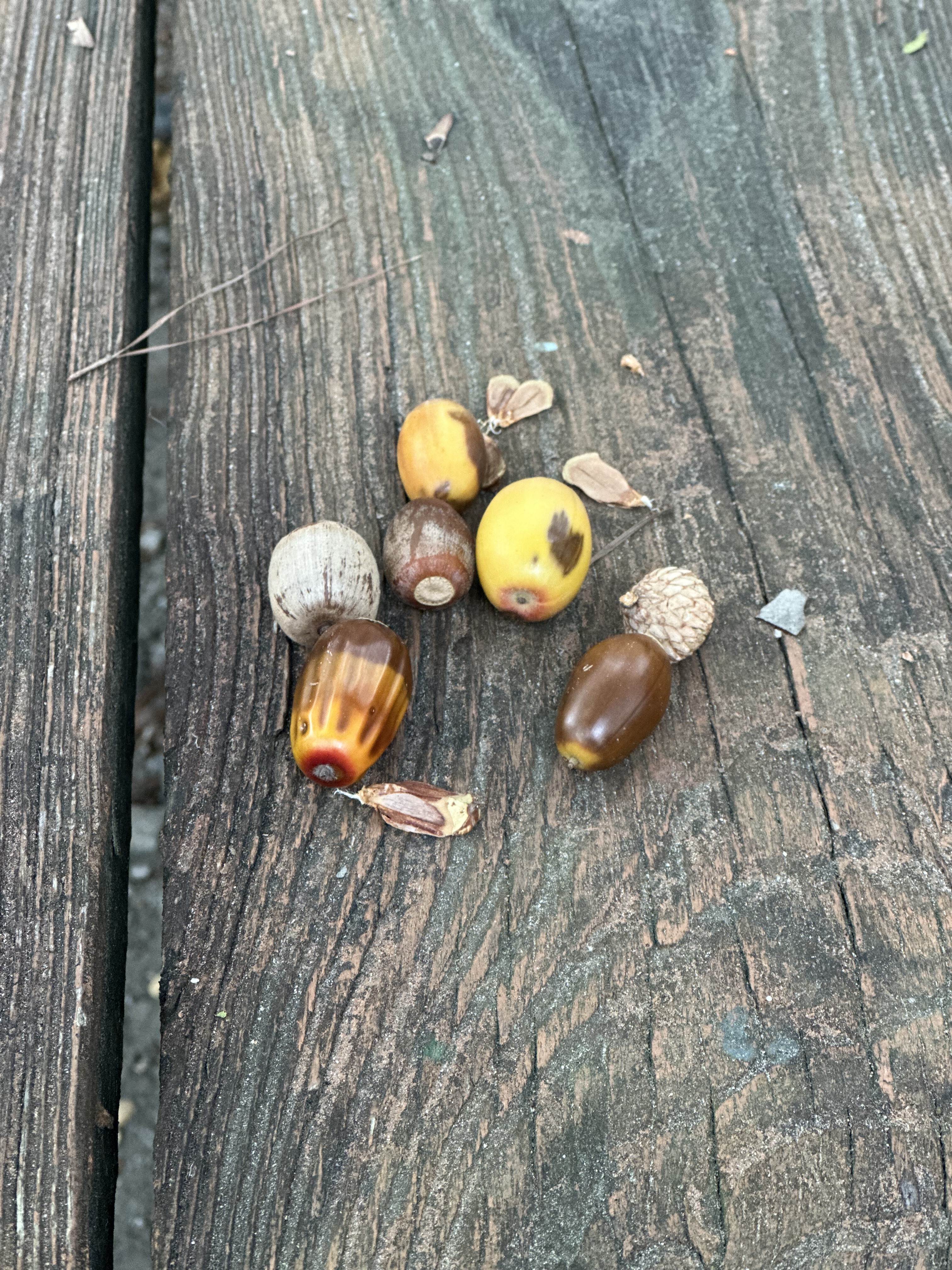
That’s why we love camping at F. D. Roosevelt State Park so much. It’s at the tip top of Pine Mountain, less than an hour west from home but feels like it’s a long way off, and the mountain gives us a taste of North Georgia without actually being there. This morning, it’s 45 degrees out, and that sweater weather I’ve been craving has surpassed the mark and gone to sturdy jacket weather for the first dog peeing window of the morning. You can still smell the smoke from last night’s campfires in the air and on your clothes, see the acorns someone before you left on the picnic table for you to enjoy, and feel the stirrings of cold wind brush your cheek and send leaves swirling to the ground all around you. Fellow dog walkers are out with their own camping dogs, and early birds are preparing to cook breakfast. Soon there will be the smell of bacon sizzling in every direction. For now, though, my coffee is brewing and its rich aroma greets me like the welcoming home of a family member from an it’s-been-too-long scolding. I’ll step inside and finish morning prayers a few hundred feet closer to heaven today than I am at home, in location and in mindset.
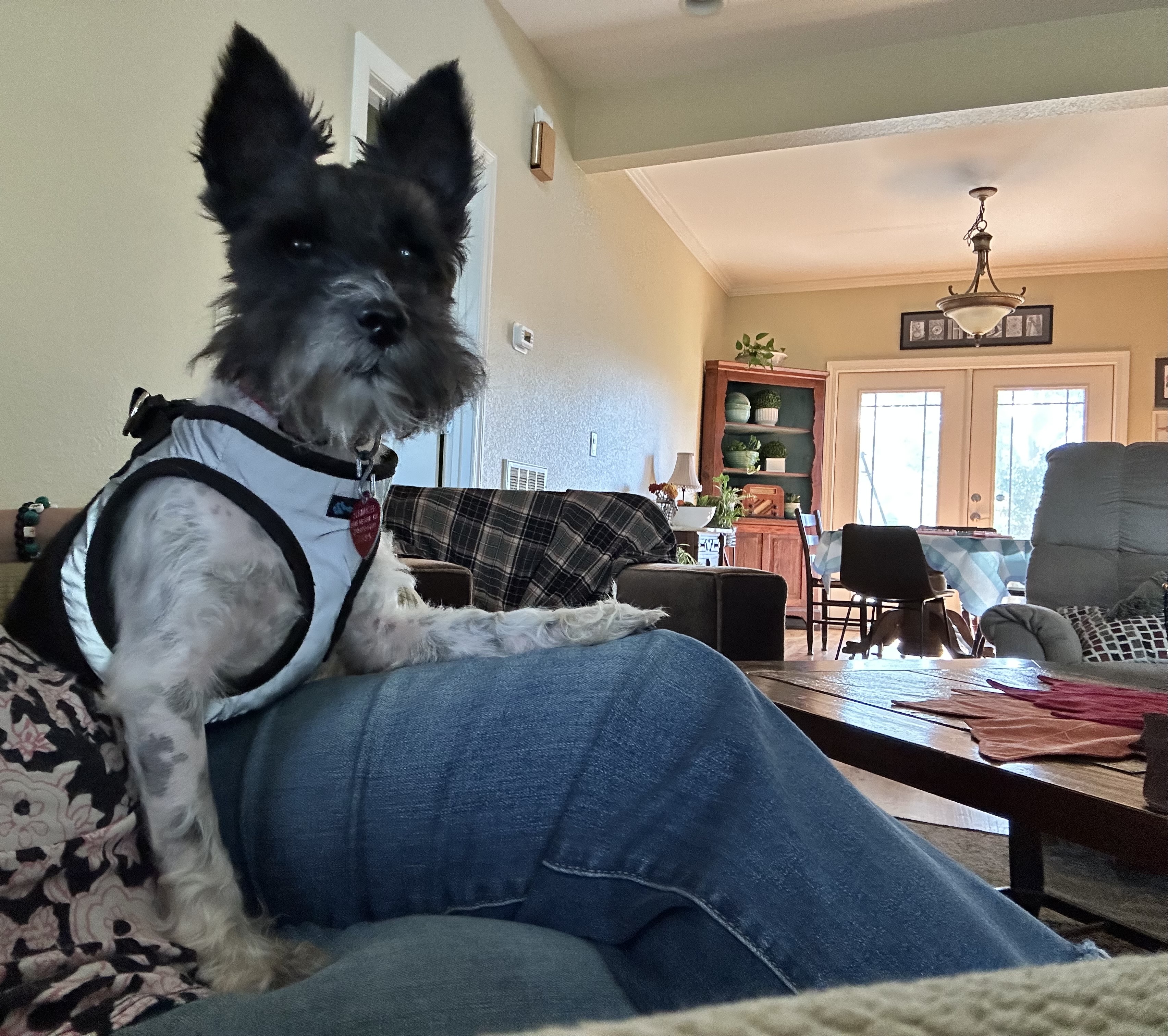
In a few minutes, I’ll slice fresh baked pumpkin bread and share a bite with three tiny waggy tail patient waiters with perked up ears and the cutest cocked heads, a trio of rescues who have never ever committed a single wrong in their entire lives and never will, if you ask them. One is on his first camping trip – maybe ever – but at least in the Wayfarer with us. He’s still learning how all this works, and the good Lord allowed him a quick lesson that putting his nose in my piping hot coffee cup and trying to steal a quick taste has its own consequence.
A while later, I’ll build a fire and cuddle up under a blanket in the padded chair to read out by the warmth where life is buzzing with relaxed morning enjoyment by the good-spirited folks who walk past in wrinkled flannel shirts and one-notch-above-pajama pants but way short of a matching sweatsuit, further still from social attire required anywhere but on a campground, everyone’s hair still tousled from last night and holding a dog leash in one hand and a coffee cup in the other. I’m going back and forth between Road Trip by Mary Kay Andrews and two of my favorite memoir-ish country living volumes by Gladys Taber: Especially Dogs and Stillmeadow Road. A good while after that, in between walking dogs and birdwatching with Merlin at the helm and pimento cheese sandwiches and few games of computer mahjong, I’ll change into actual blue jeans and bring out the real tiles and racks and light an apple cider candle while I play a couple of hands of Messy.
Retirement officially began for me August 1st, so each second and fourth Friday, I reflect on the first year of retirement in two-week windows and what it’s like in this new chapter of life. This idea of retirement reflection was sparked when members of my writing communities and personal friends asked me how I would spend my time and if I thought I would get bored. At the beginning of my first week off, I used a green spiral notebook to make a list of all the things I wanted to do — something enjoyable each week, blending in some new hobbies and routines as well.
My late father said this about retirement: You don’t retire FROM something, you retire TO something, and you’ll be busier than you’ve ever been. He was right, and I love doing what I want to do when I want to do it and having the flexibility to travel and engage in new hobbies – or stay home in comfortable clothes and enjoy more relaxed pace on the Johnson Funny Farm.
Here are eight of the most recent things I’ve enjoyed in my first three months of retirement:
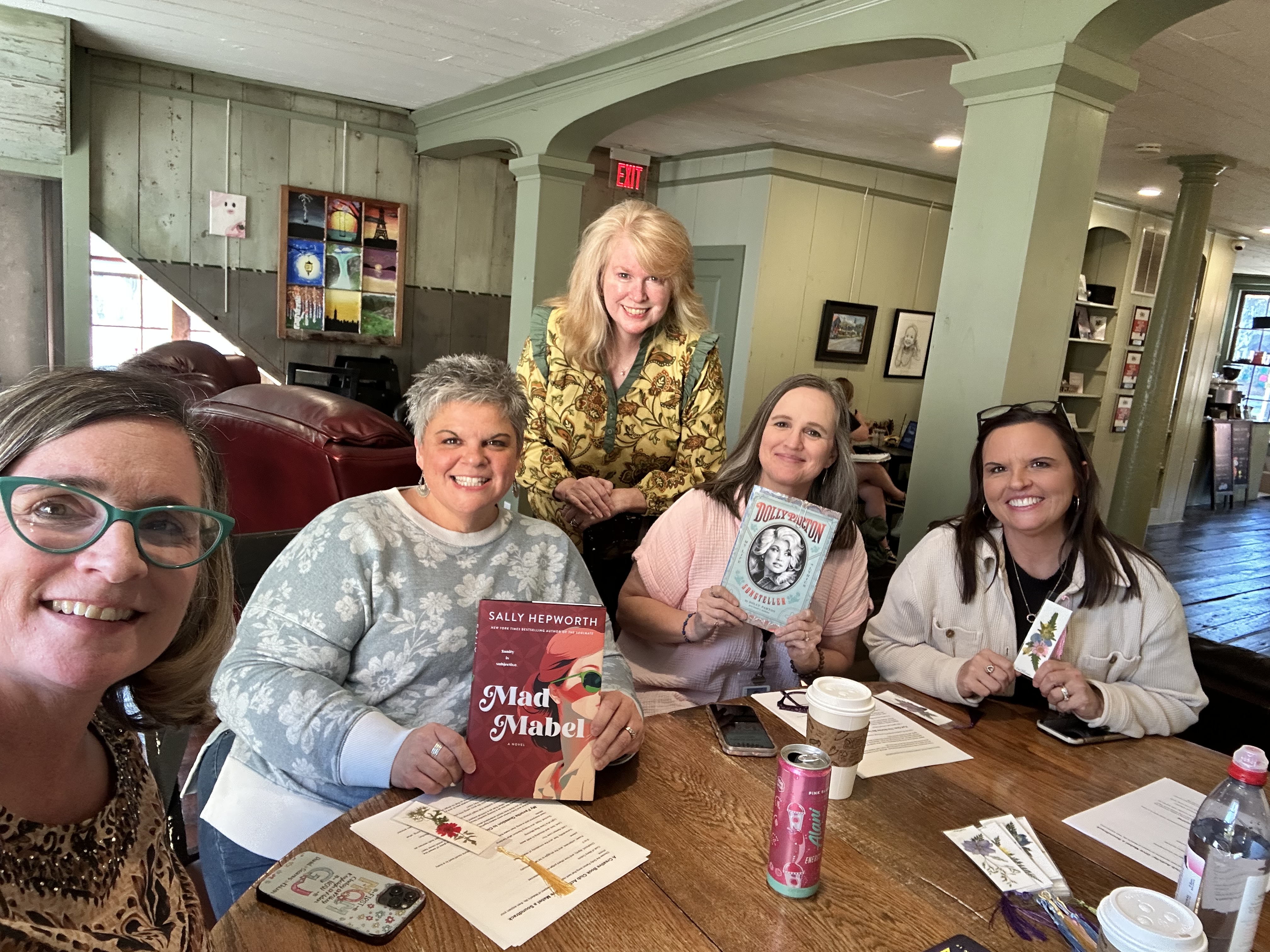
51. Kindred Spirits October Book Club – We met at our favorite coffee shop last night to discuss Mad Mabel by Sally Hepworth and The Songteller by Dolly Parton. We talked about the power of story, the refusal of women to be thrust into a particular identity determined by the world, and the perceptions of aging women in terms of freedoms and restraints. These two books paired nicely as nonfiction and fiction text selections. Our book club has remained six strong, and we’re nearing the end of our second year together.
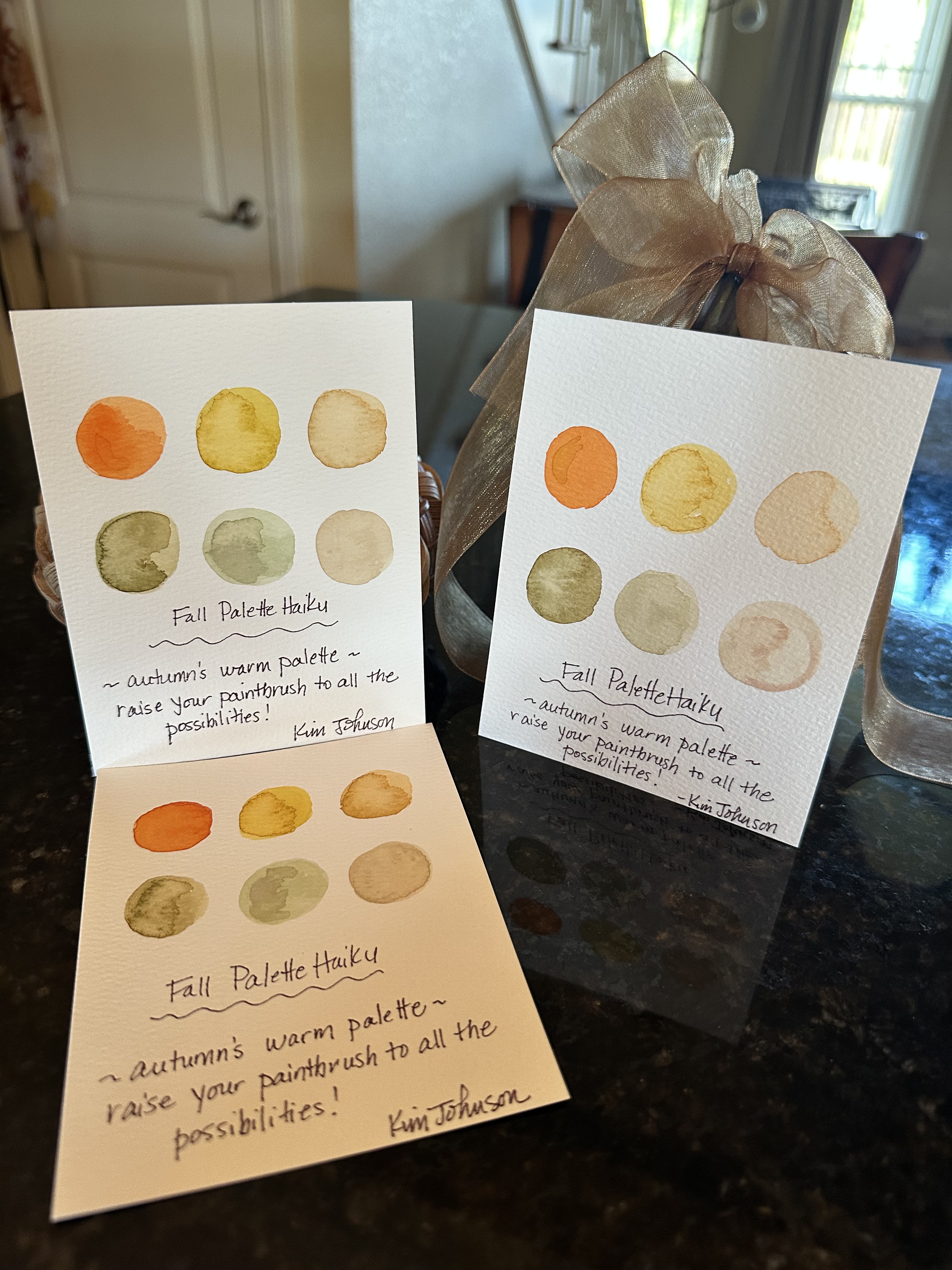
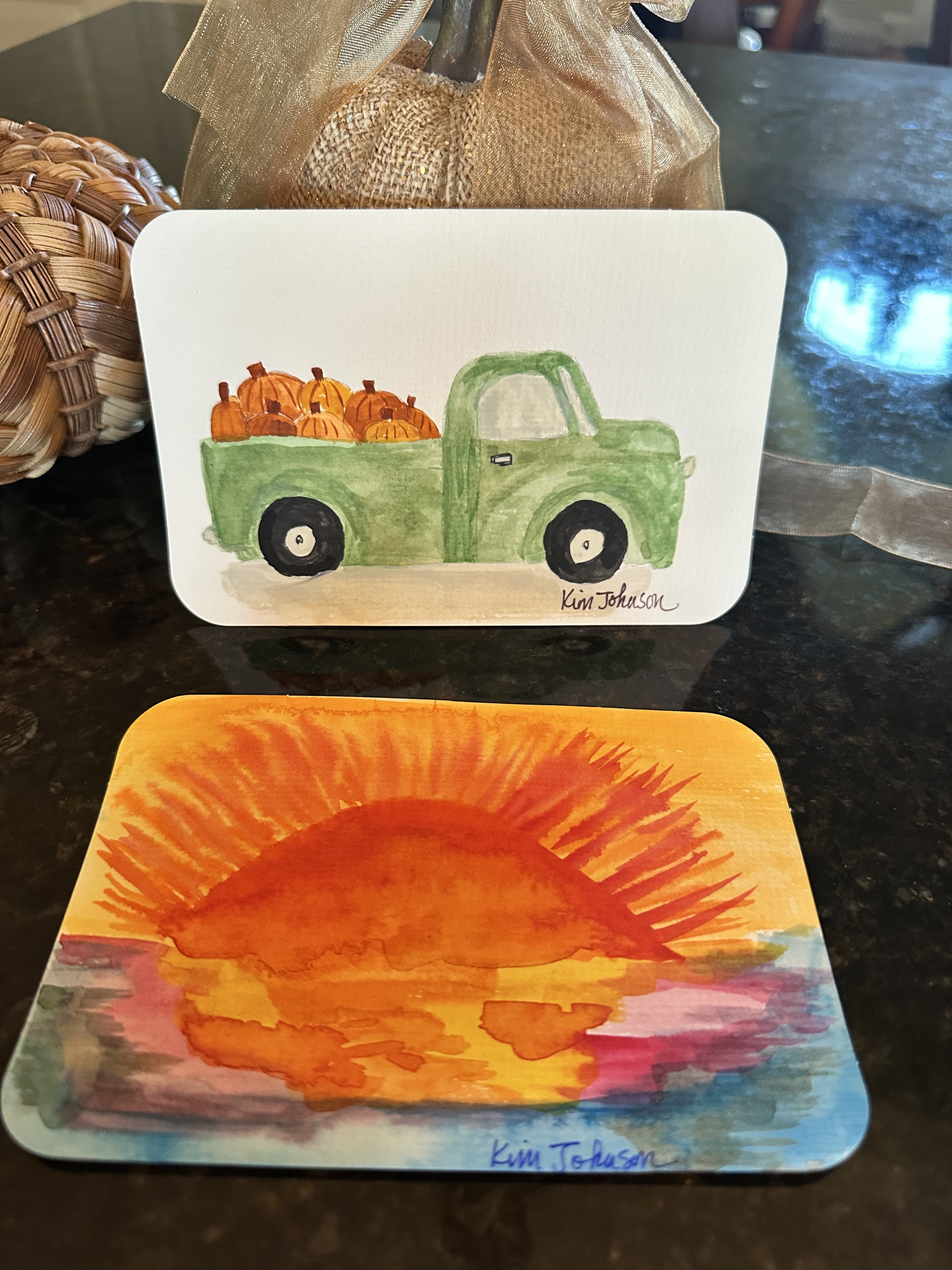
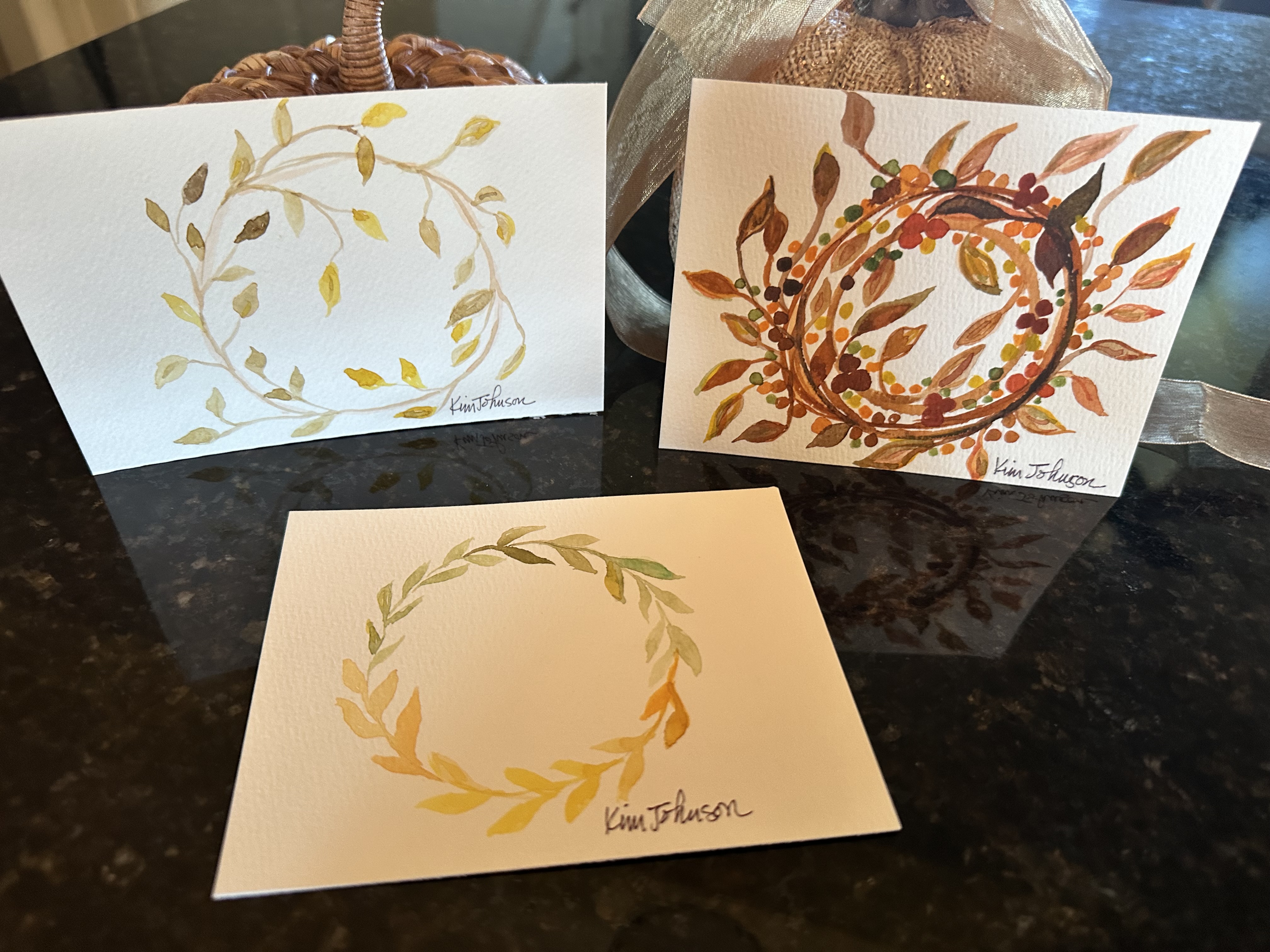
50. Watercolor Poetry Postcards – One of my favorite things to do is enjoy a watercolor painting day a couple of times a month. I like the watercolor workbooks by Emily Lex because she simplifies the process of creating art. Recently, I’ve discovered the YouTube Easy Design painters, who take viewers step by step through techniques. This month, I created postcards for my November postcard poetry challenge and also Bible bookmarks for Christmas gift bag items collected by a faith-based women’s recovery program in a neighboring state.
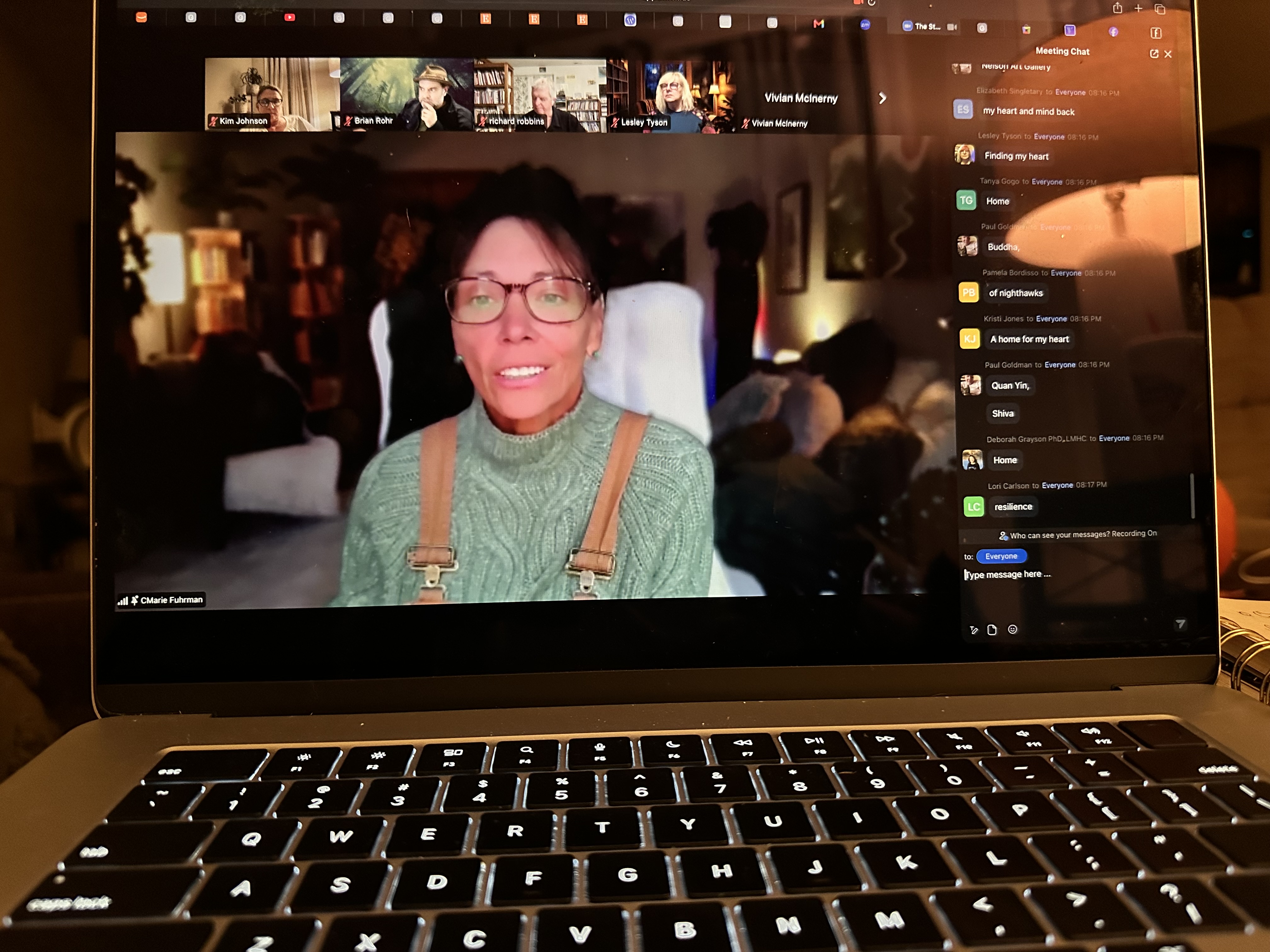
49. Attending two Stafford Challenge Guest Poet Zooms – C. Marie Fuhrman was the October Guest Poet on the Stafford Challenge monthly lineup of poets that we get to write with throughout the year. She used poetry by Joy Harjo to inspire us to write our own poems in our one hour Zoom session for October. Dr. Deborah Grayson kicked off a Poetry as a Healing Art series this month and brought spectacular prompts for getting us geared up for writing. I always look forward to these monthly evening events – I gather my notebook and pen, make a cup of tea, and log in to see the faces of other poets from all across the globe as we write together.
48. Open Write with my EthicalELA writing community – I’ve belonged to the Ethicalela writing community for nine years now, and each month we write poetry together for a few days out of the month (excluding April, when we write poetry together every day in honor of the Bard’s Birthday month – a/k/a National Poetry Month). This month, I wrote four poems inspired by prompts shared by rotating hosts throughout our writing community. You can check out the Open Write at http://www.ethicalela.com and click on Open Write to see what this community offers!
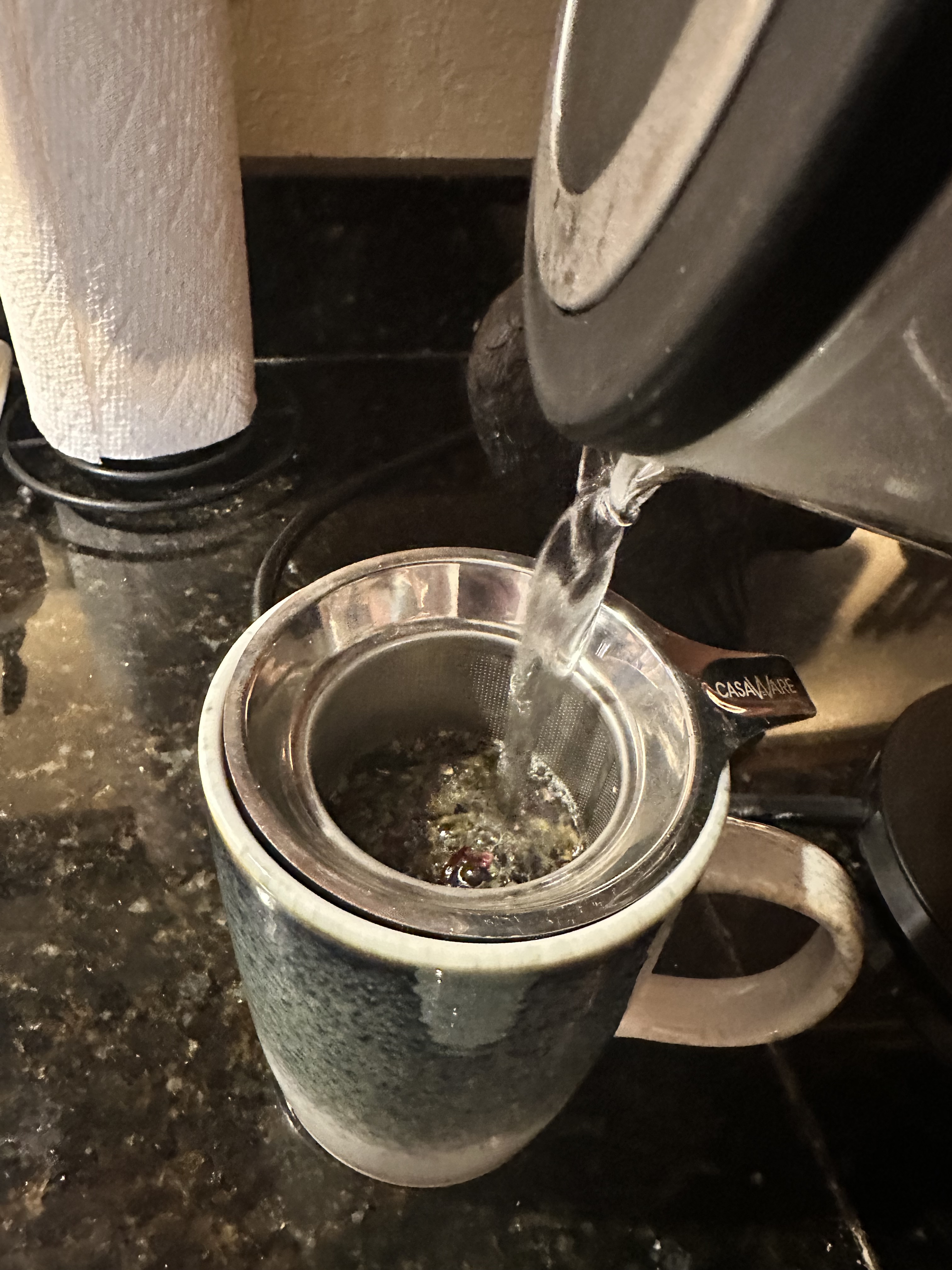
47. Making the Perfect Cup of Tea to drink while making mental notes about Things that Don’t Suck– For Christmas in 2025, I got one of those electric tea kettles that has the Digital Touch feature to make certain kinds of tea at their optimal temperatures. In Blue Ridge, Georgia in the fall of 2025, I picked up two tea mugs with the metal steeping strainer that lets us steep loose tea leaves directly in our cups for maximum coagulation with the water. When my late father returned from a mission trip to China in 2014, he’d brought back loose tea and given us a masterclass in how to steep it. It’s a retirement treat to be able to sit back with a cup and reflect on the day joyfully with at least the work demands removed from all the bad things happening in the world.
46. Daytime Movies – It’s always been a weekend thing or an evening thing for us unless we were on a break, but being able to take off in the day to go see a movie is a guilty pleasure!
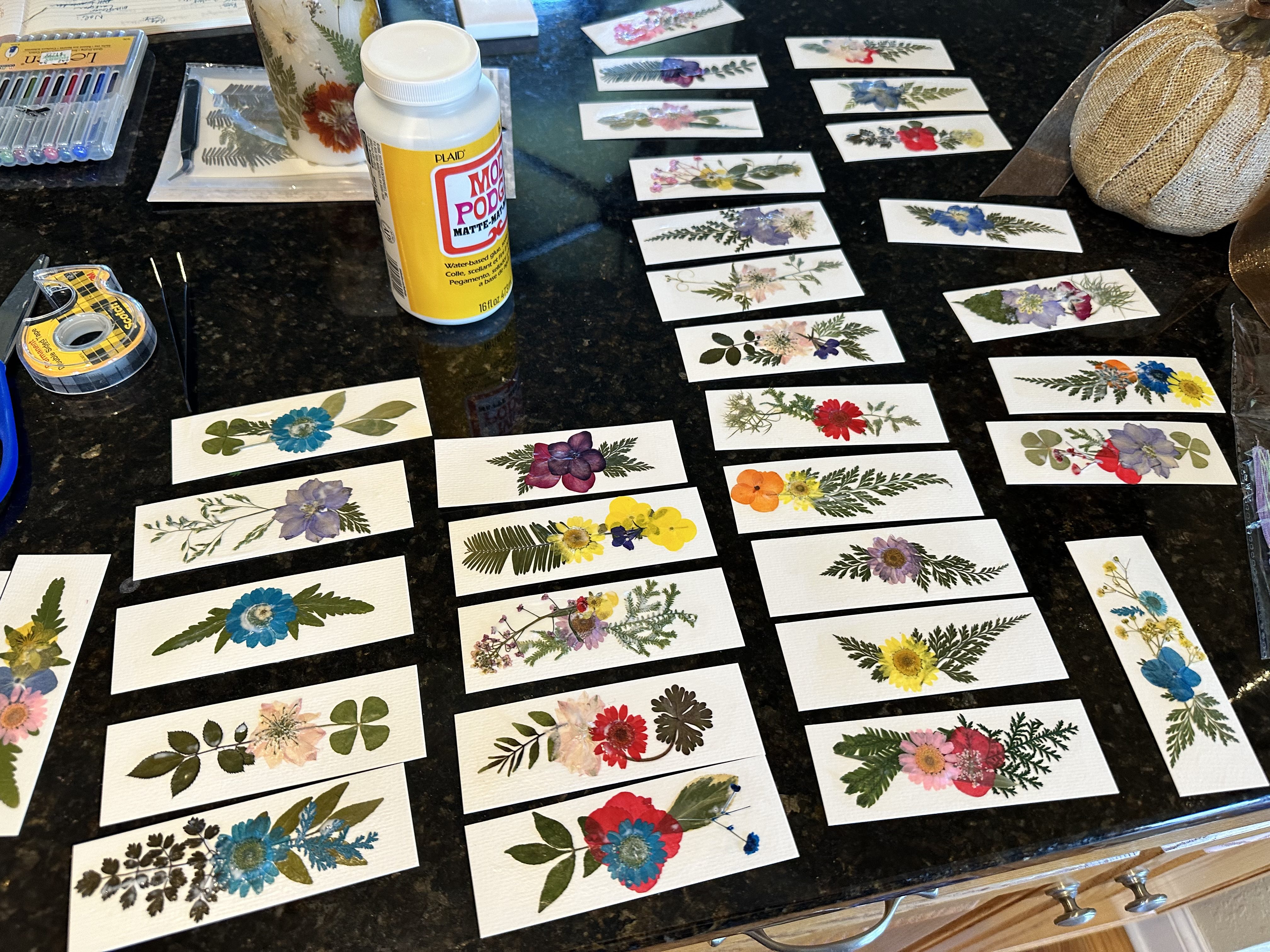
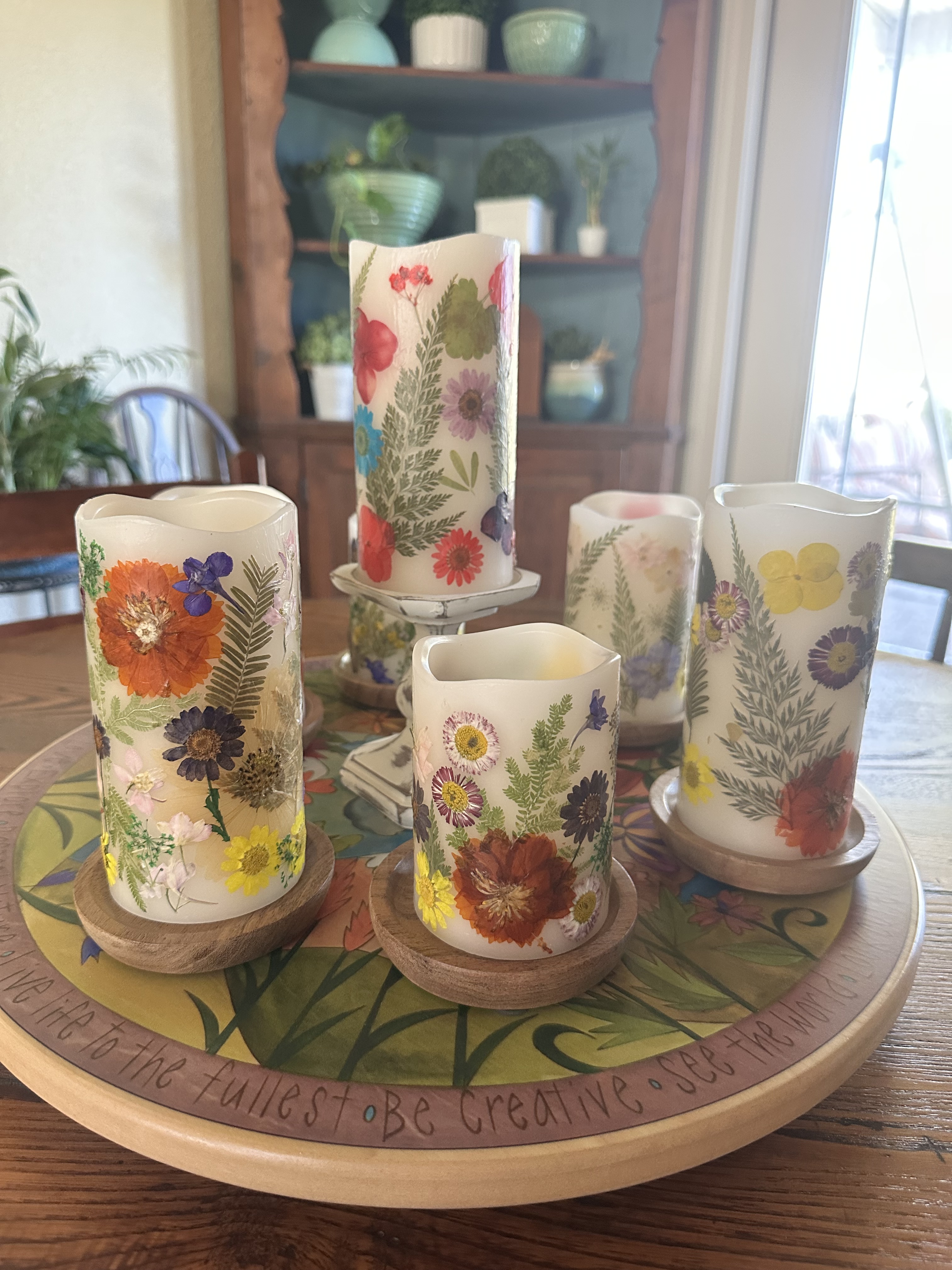
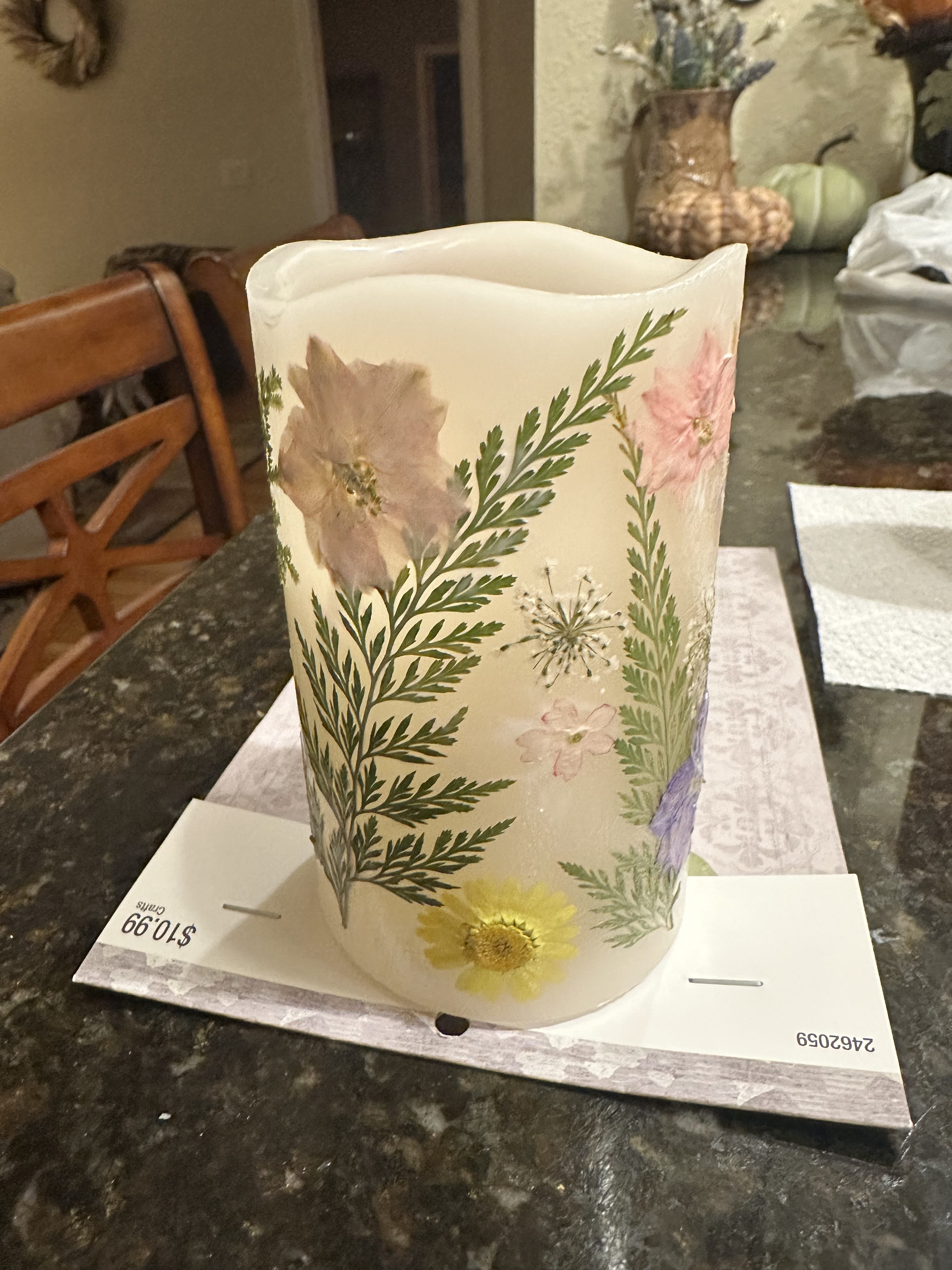
45. Decoupaging Candles and Bookmarks with Wildflowers – It will take about 6 weeks for my own pressed plants and flowers to be ready for projects in the traditional plant press, and I don’t own a microwave plant press, so I found a Utah-based flower farm as a source for pressed wildflowers and ordered a selection based on birthday month flowers. These are the plants I’m using currently to create decoupaged candles and bookmarks. It’s fun to feel the energy of creativity and see the beautiful transformation of candles as I work. I also love how something as simple as a bookmark and a touch of greenery and some flower petals can create the loveliest page markers.
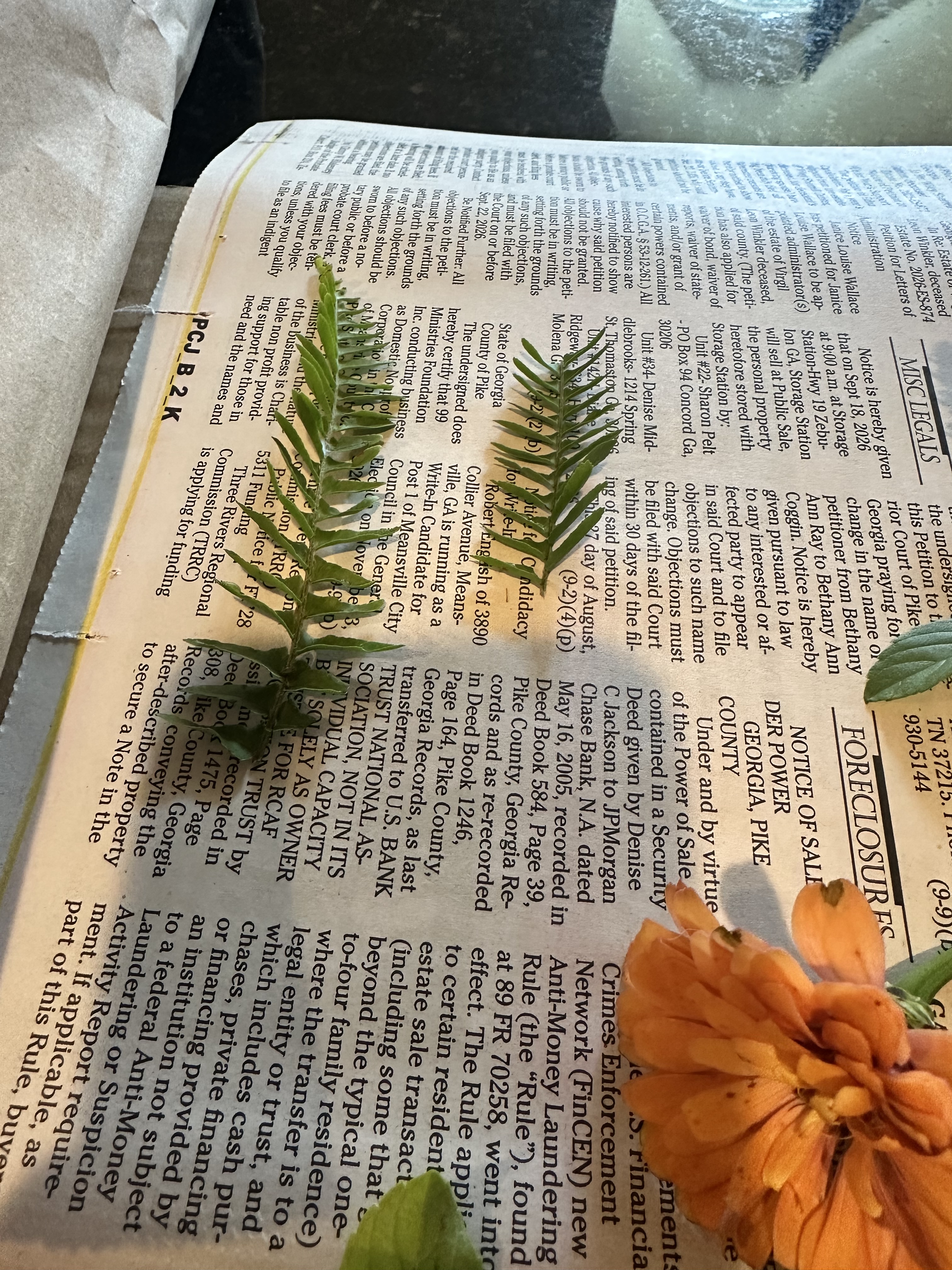
44. Plant Pressing – I hauled out the old plant press and gathered wildflowers and greenery from all across the Johnson Funny Farm, including my sister-in-law’s zinnia gardens. I pressed plants for using in decoupage projects.
Here are the previous things I’ve added to my list of 100 Things I’m Enjoying in Retirement. I’ve reversed the order, going backwards in time to the beginning.
43. Virtual Author Reading for Time in the Landscape
42. Author Readingfor Anna Roseboro’s Book Study
41. Indie Bookstore Shopping
40. Dock Time on Jackson Lake in Georgia
39. Adopt a Dog
38. Train Ride to See Fall Foliage
37. Cabin for a Birthday Celebration in North Georgia
36. Fall Baking
35. Hosting Open Write
34. Kindred Spirits September Book Club
33. Mahjong in Blairsville, Georgia
32. Daytripping for Lunch and Small Town Adventuring
31. Hiking the Appalachian Trail
30. Camping at Vogel State Park
29. Lunch with Friends
28. Almost-Birthday Pedicures with my Sister-in-Law
27. Mahjongg Regular Group Formation
26. Stafford Challenge Writing Workshop
25. Stafford Challenge Small Group Zoom Meetings
24. Dolly Parton Tribute at the Grand Ole Opry in Nashville, Tennessee
23. Labor Day Camping at F. D. Roosevelt State Park in Pine Mountain, Georgia
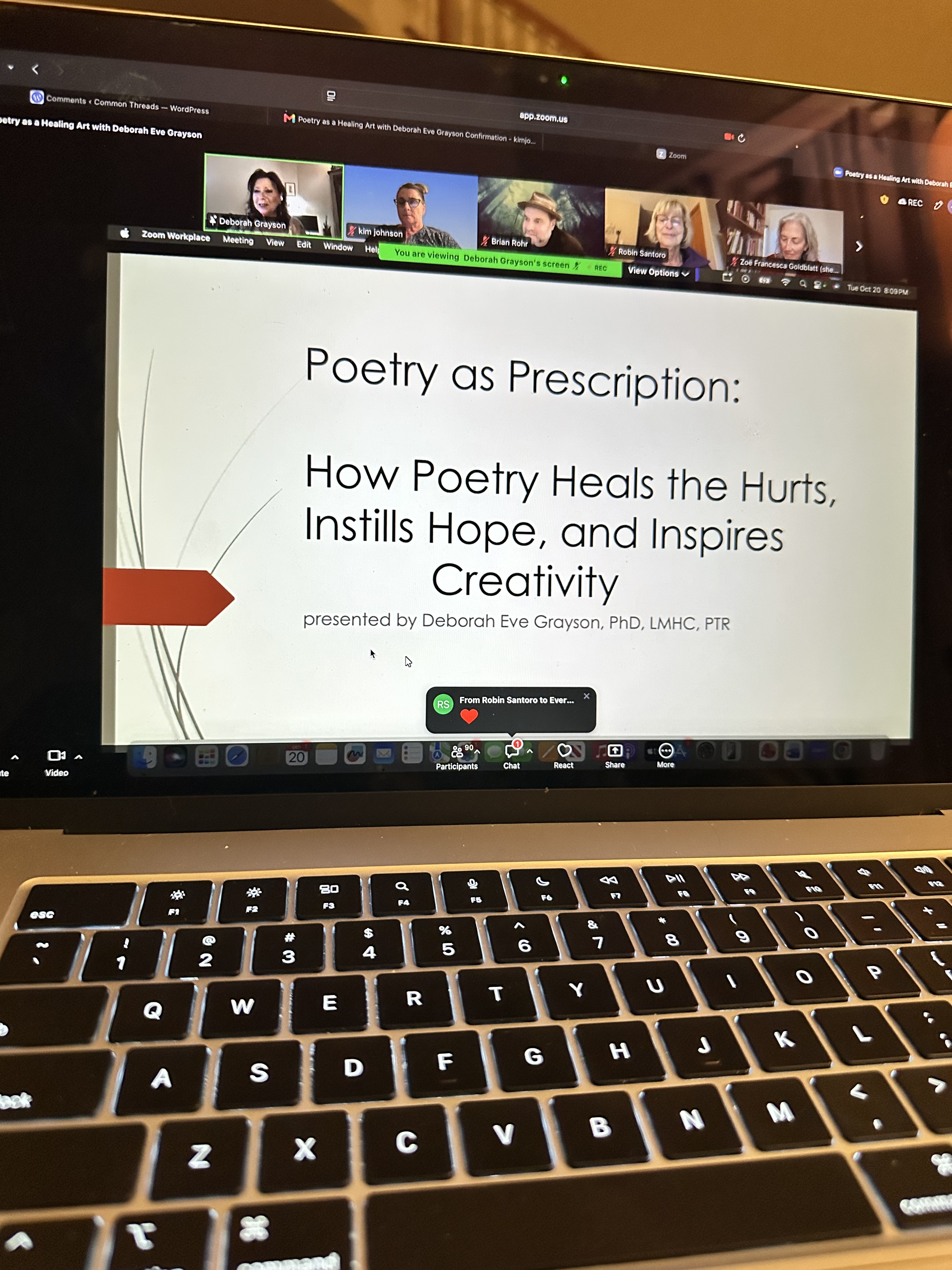
Yesterday, I shared a little about the Poetry as a Healing Art series that began this week as part of The Stafford Challenge. You can still sign up (registration is free) for the remaining sessions here at this link. Dr. Deborah E. Grayson led us in some prompts on Tuesday evening to inspire writing as therapy. One was a soundtrack of our lives, which I wrote about yesterday, and today I’ll share three more inspiring ideas from Tuesday evening’s session.
Dr. Grayson asked us to consider where we find healing and to write about those places in response to the “salty times” of our lives – such as divorce, death or illness of a loved one, or loss of a beloved pet. Many people responded that in addition to poetry, healing is found in scripture, in reading books, in art, in nature/gardening, and in playing or walking with pets. I agree with all of those and would add coffee and conversation with friends and loved ones as well. I love travel and seeing new places and parts of the world and find that travel often offers new perspectives that can bring healing.
She also inspired us to create a Prescription for Loneliness. My first go-to is reading. I find that when I read, I’m keeping company with characters and authors. My book club sisters and I meet each month to talk about our reading, and that’s a lovely time shared with others! Getting outside with my dogs also keeps me in good company when my husband is at work and would be #2 on my prescription list. I shouldn’t admit this, but Hallmark movies somehow make me feel like I’m a nicer person, and those have a medicinal effect on loneliness too. Grayson explained that all of these items on our brainstormed lists can be used in poetry, such as list poetry.
Finally, our concluding activity was to spend a few moments and write a list poem. We could use our Prescription for Loneliness ideas, our Playlist of our Life ideas, our places we find healing, or we could write one like poet Andrea Gibson made in the days before she died after a long battle with Ovarian Cancer in July 2025. Her poem was entitled A List of Things that Don’t Suck, to Make Your Day a Little Brighter. I’ll begin my own list with 3 that come to mind:
Things that Don’t Suck
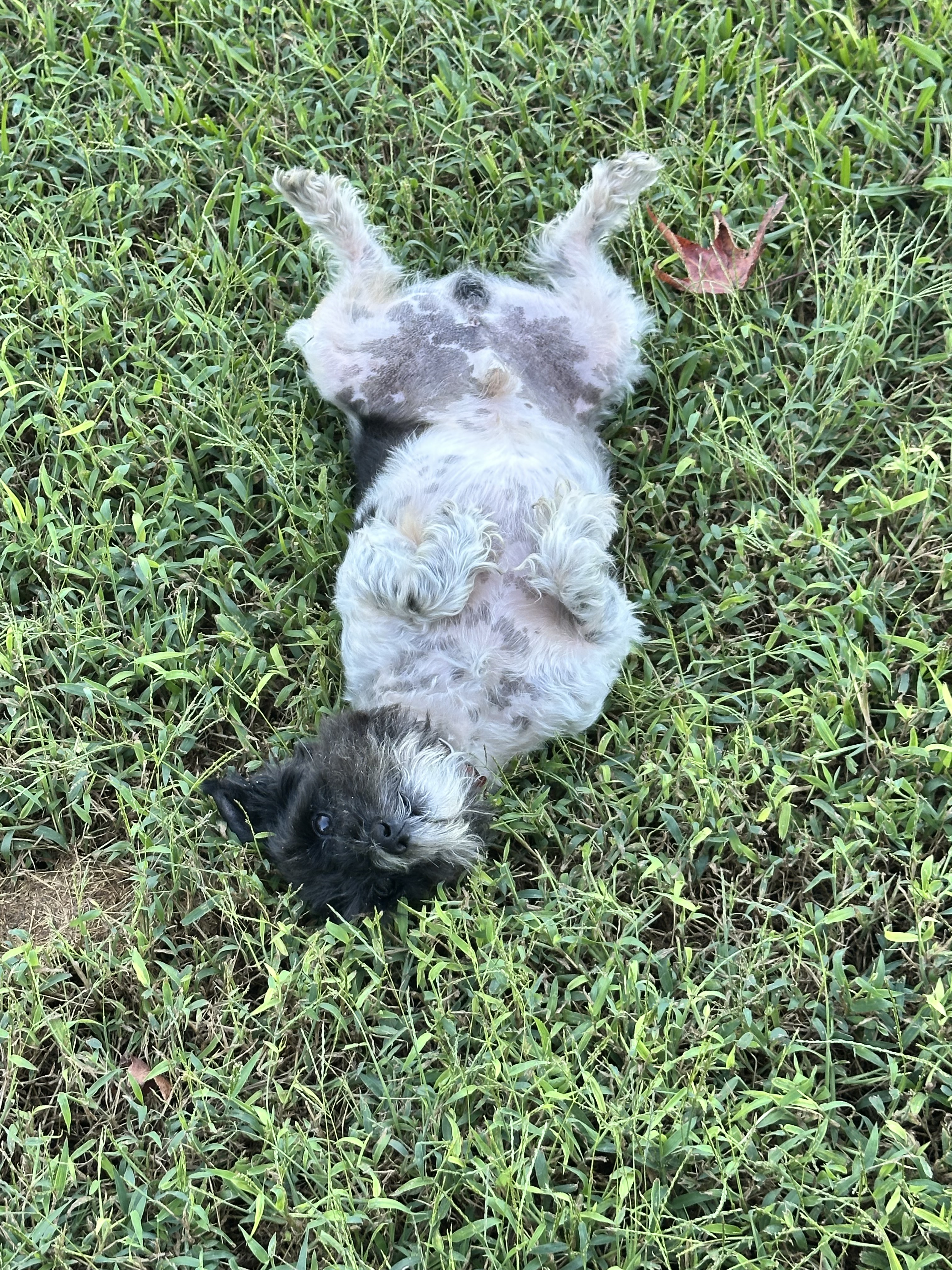
A rescued dog who rolls belly-up in the grass, kicking his legs toward the sky in happiness in the autumn sunshine and you think you see him stop for a second to offer you a smile of gratitude.
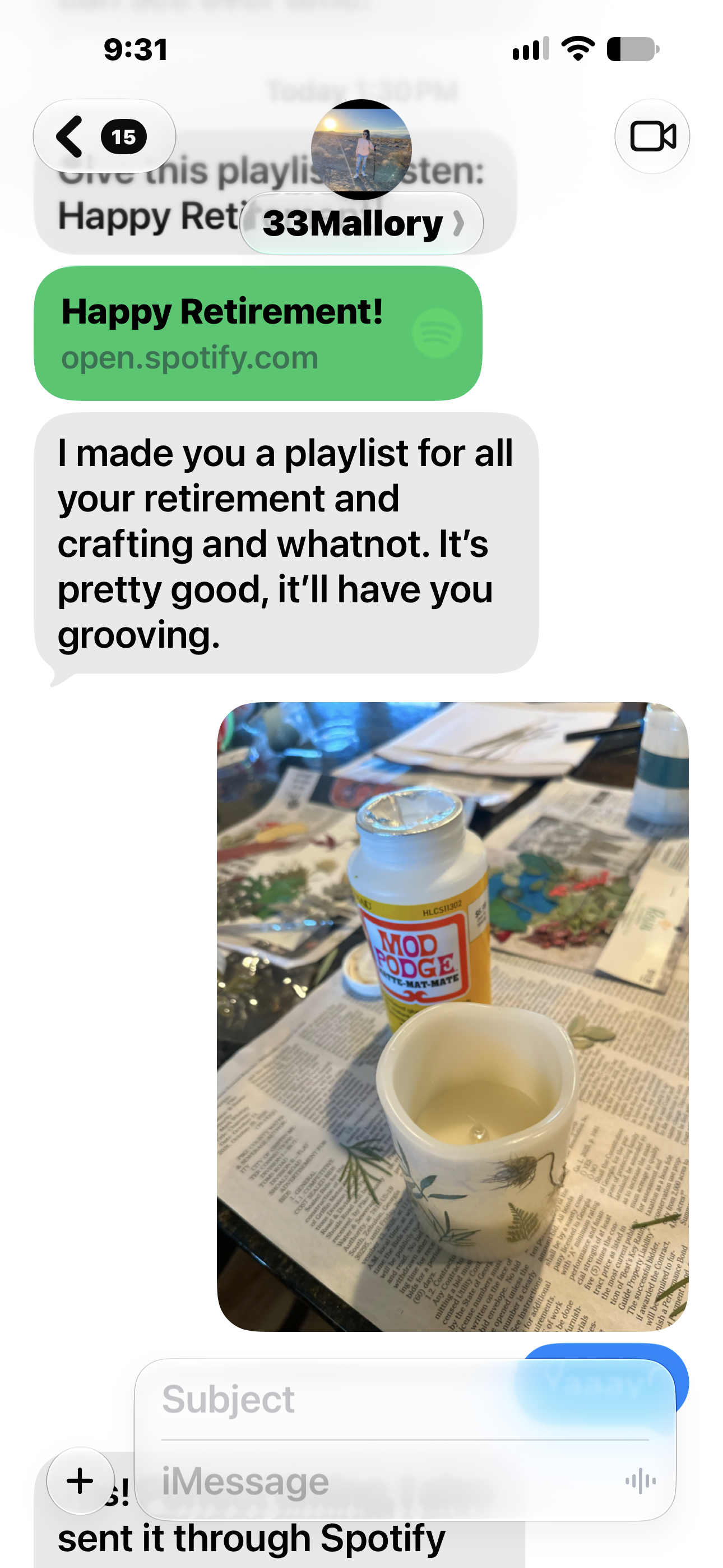
A playlist of great songs made especially for you in retirement, sent to you by your daughter.
Last night was a fabulous kickoff of the Poetry as a Healing Art series that is being sponsored by The Stafford Challenge. These sessions are free, and you can visit this link to register for the remaining sessions if you are interested. Dr. Deborah Grayson led the first session and took us through the many ways that poetry can heal hurts, instill hope, and inspire creativity.
Of the many activities and prompts that she led us through, one of my favorites was making a soundtrack of our lives. The chat thread lit up with so many fabulous songs, and I’ll bet there were 200 songs listed by the entire group of participants in attendance.
Earlier in the day, my daughter sent me a Spotify playlist to enjoy in retirement, particularly while I’m working on creative ventures such as painting our decoupaging. You can click here to listen! She’s so thoughtful and creative, and she knows I love all these songs.
What a treat to have music and those in our lives who share lyrics – which is, of course, poetry – with us to celebrate the moments of our lives. Poetry IS a healing art, and one for which I remain ever so grateful.
For Mallory and everyone reading today, go to YouTube and listen to a song from my playlist just for you:
I Love by Tom T. Hall ~ enjoy it!
take the time today
to create a soundtrack of
your life ~ share a song!
‘
I took a picture right as my daughter shared the playlist, and she replied: perfect timing! She knew I would be in the middle of something creative right at that moment when she sent it.
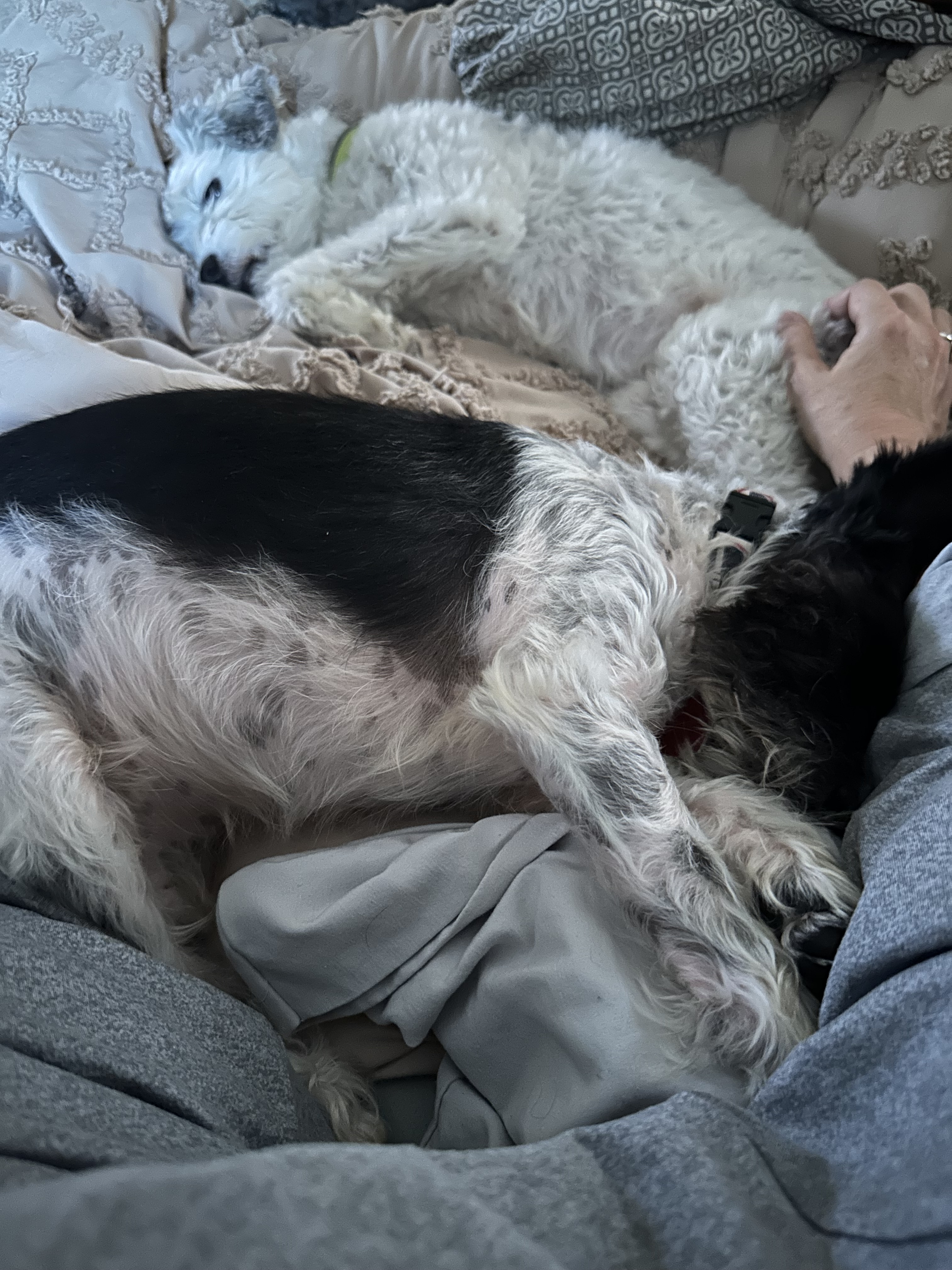
The cold front rolled into middle Georgia on Friday night, inviting us to watch movies and be lazy with our three dogs for the weekend. It isn’t often that we’re quite this relaxed and lazy all weekend, but we gave in and did not resist the urge to pile up the blankets and fire up Netflix.
I invite you today to find a seventh book anywhere and join me in a fun discovery.
Process
Find the 7th book on a shelf or pile wherever you are, in a library, a bookshop, at home or school (any genre).
Turn to page 7.
Read the seventh line.
Let that line inspire a 7-line poem. The line can become part of your poem, or just a muse.
I looked to the seventh shelf, seventh book from the left, and plucked Stillmeadow and Sugarbridge by Gladys Taber and Barbara Webster from the bookcase. The seventh sentence: Even when the mortgage reared its ugly head, we never regretted it and now it is fine to know everything is paid for, our forty acres – although how can man own God’s earth? – and the 1690 farmhouse, and the barn, even the pond, and presumably that cricket chirping endlessly on the hearth is also ours.
I chose a tanka for today and can split the last two lines into two more if I decide on having 7.
Merely Caretakers
how can man own God’s
earth? impossible, for we’re
merely caretakers!
and let’s be real ~ we pretty
much suck at that simple task….
For more information on Gladys Taber and her cozy books, check out A Reader’s Almanac with Celeste on YouTube and search for Gladys Taber’s Cozy Seasonal Books episode. I tried to embed the link here, but sharing has been prohibited by the owner of the channel. Gladys Taber’s books are like stepping into a painting by Currier and Ives and living there for a little while in the days before the world went sour.
Matt Forrest Esenwine is a New Hampshire-based author of a dozen children’s books and our host today for the third day of the October 2026 Open Write at http://www.ethicalela.com. You can visit the website and click on Open Write to read his full prompt.
Matt shares his process here:
Here’s all you do: pick an object, any object (most boring object ever – or not!), and begin thinking of ways to describe it. Once you have your list, scan through it and see what words/images/feelings you are drawn to. That’s your basis for your poem.
I’ve been decoupaging candles with pressed wildflowers lately – something my mother taught me how to do, and it keeps her memory close. I decided to write a haiku about the ones I have created. While I’ve been creating some flameless ones for my grandchildren from their birth month flowers to use as nightlights, I think smaller ones placed as seating card holders at a wedding reception would be a lovely wedding favor for guests to take home after gracing the tables with light during the gathering. They look wildly romantic, and the ones with faint pink take my breath away.
Joel shares, “My studies taught me that many poetic forms winnow down in length as they ramp up in meaning. A sonnet’s couplet, a sestina’s envoi, a haiku’s closing pivot, a villanelle’s quatrain – you get the idea & the impact: As the form gets smaller, the idea feels more potent, more provocative. There are exceptions. Exceptions like the cherita.”
I love narrative poems, and Garza reminds us that these are, essentially, stories in poetic form. He explains the process:
Remember that the cherita is a story. Aim for a tale that you need to tell (or maybe a tale that you’ve never told). Be as direct as possible in welcoming your reader – one line only.
As you develop the story, be deliberate and succinct. Two lines only for this middle stanza.
Finally, resolve with a comparatively expansive meditation on the meaning or mystery of this story. Knock yourself out — A whole three lines!
One line. Two lines. Then, three lines.
Jay
I looked to the directions, but I only needed the final stanza to tell my story. So I followed my gut and wrote what was inside.